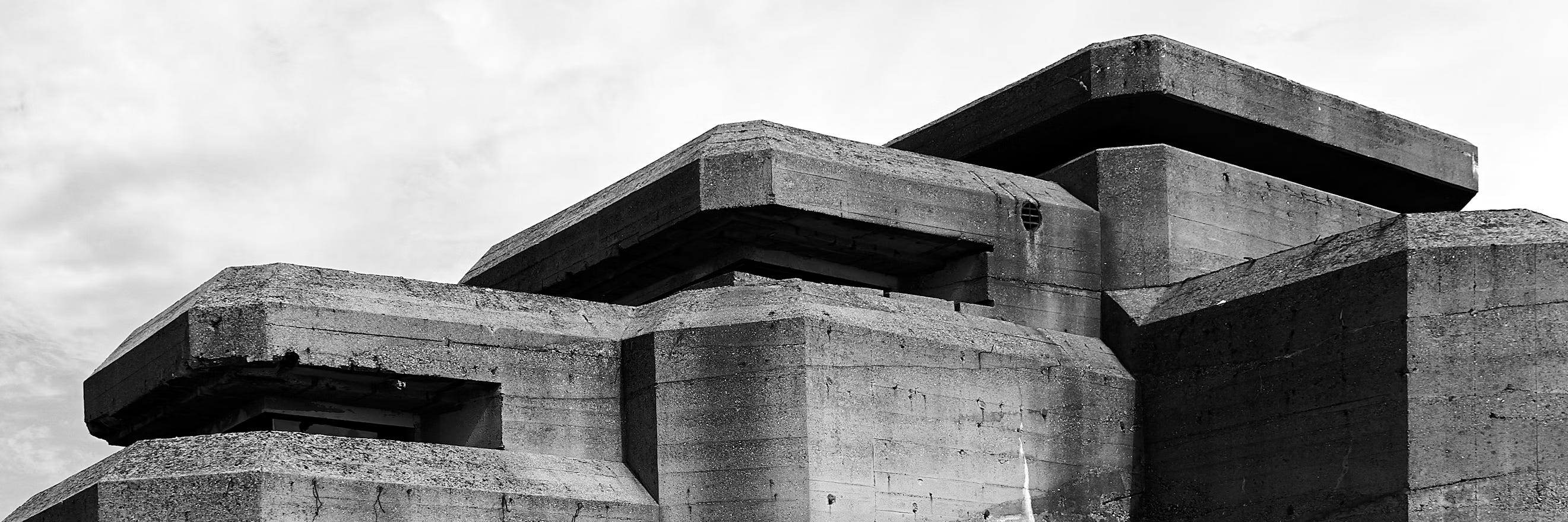
The Bunker Logic
On billionaires, bunkers, AI, and the systems being built to outlast social breakdown.
We’re living through the construction of a world where the billionaires have stopped believing in the rest of us.
The bunkers are just the visible part. The real end game is the one being written in code, policy, and surveillance infrastructure. Most of it in plain sight. Most of it funded with public contracts.
Mark Zuckerberg is building a vast bunker complex in Hawaii, with backup properties in Palo Alto and Lake Tahoe. Elon Musk has a sprawling compound outside Austin, Texas. OpenAI chief Sam Altman maintains a hidden underground shelter. And they’re far from alone.
These bunkers are serious projects. Solar energy systems, advanced air and water filtration, hydroponic farms. Full medical facilities. When the apocalypse comes, nuclear war, AI catastrophe, climate collapse, civil unrest, whatever, these places are designed to keep billionaires and their families fed, healthy, and comfortable while the rest of us figure out what comes next.
The scale tells you something. Zuckerberg’s Hawaii compound costs over $300 million. Musk’s Texas estate came in around $35 million. Reid Hoffman, the LinkedIn co-founder, calls it “apocalypse insurance,” and estimates that nearly half of his billionaire friends from Silicon Valley either have some secret hideaways or are working on one.
New Zealand has become the bunker capital of the tech elite. PayPal co-founder Peter Thiel had plans for an elaborate bunker-like lodge in a remote part of New Zealand’s South Island, though the local council rejected it in 2022, saying it would “substantially detract from the quality and naturalness of the outstanding natural landscape.” Sam Altman is reportedly willing to seek refuge at one of Thiel’s New Zealand properties if things fall apart. The country has become what observers call a bolthole of choice for the tech elite, or as Hoffman put it, “Saying you’re ‘buying a house in New Zealand’ is kind of a ‘wink, wink, say no more.’”
What’s worth paying attention to isn’t just that these bunkers exist. It’s what they suggest about where these people think we’re headed, and what some of them are openly willing to say about their actual plans.
The end game, plainly stated
Here’s the thing that should alarm you more than the bunkers themselves: these billionaires aren’t really hiding their vision anymore. Not entirely, anyway.
Peter Thiel, perhaps more than anyone else in tech, has started to speak plainly about his view of the future. In a recent interview with the New York Times, when asked directly whether he wanted the human race to continue existing, Thiel paused. A long, uncomfortable pause. Then he said “Yes,” but the hesitation lingered. The exchange revealed something: that at least some of these people are genuinely uncertain about whether humanity as a whole is worth preserving.
Thiel has spent years articulating a version of technological progress that’s deeply pessimistic about democracy itself. In a 2009 essay, he openly questioned whether freedom and democracy were compatible, arguing for systems where power concentrates among those with the “expertise” to drive progress. He’s been consistent about this: Western civilization entered irreversible stagnation in the 1970s, he argues, and only radical technological acceleration, combined with radical political restructuring, can save us from decline.
So what does that restructuring look like in practice?
Look at Palantir, the data analytics company Thiel co-founded. It’s not a household name, but it’s become one of the most valuable companies in the world. Its “products,” if you can call surveillance and targeting systems that, are used by military and intelligence agencies globally. The Israel Defense Forces use Palantir’s AI software to strike targets in Gaza. The U.S. Defense Department uses it for drone targeting. And now, in Trump’s second term, Palantir is expanding into domestic governance in ways that should make you uncomfortable.
The Trump administration has tapped Palantir to create what amounts to a master surveillance database combining tax records, immigration records, biometric data, and more. ICE is paying Palantir $30 million for ImmigrationOS, a platform that will use AI and data mining to identify, track, and deport suspected noncitizens, with the system flagging individuals who meet certain criteria. Elon Musk’s Department of Government Efficiency (DOGE) has hired numerous former Palantir employees and is using Palantir’s contracts to create this master immigration database to speed up deportations.
What’s revealing is who benefits from this and who designed it. Stephen Miller, the Trump administration’s chief architect of immigration policy, holds a substantial financial stake in Palantir, which is to say, the person designing the policy that the surveillance system will enforce has a direct financial interest in the company building the system.
This is what the “end game” looks like, at least for one faction of billionaire techno-libertarians: a world where data concentration and AI-driven automation allow a small cadre of private tech companies to essentially become the operating system of government.
Thiel’s investments in Palantir and data analytics, combined with his political influence over figures like J.D. Vance, align with the goals of Project 2025, a comprehensive conservative plan to overhaul the federal government and consolidate power in the hands of elites through technocratic means.
Project 2025 includes calls to abolish most of the federal institutions regulating corporations, a move that would massively increase corporate profits and inequality. Thiel has been actively dismantling philanthropic commitments to this end. He’s been convincing other billionaires to walk away from the Giving Pledge, calling it an “Epstein-adjacent, fake boomer club,” and personally encouraging signatories to retract their commitments to give away half their wealth.
What matters is not that these individuals are secretly coordinating toward a shared endgame. They are not. Zuckerberg, Musk, Altman, Thiel each operate in different domains, with different priorities and worldviews. What they share is exposure to the same set of structural incentives: extreme wealth concentration, asymmetric risk, and technologies that scale power faster than accountability.
Within that environment, similar strategies emerge independently. Hedging against collapse, investing in surveillance infrastructure, accelerating automation, and reducing reliance on mass participation are not the result of a unified ideology, but of a system that rewards insulation over integration.
Bunker logic, in that sense, is not a belief system. It is an emergent property of late-stage techno-capitalism under conditions of inequality and technological acceleration, where the rational move for individuals with sufficient resources is to decouple from the system rather than stabilise it.
The consumption problem
Now, you might ask: why would billionaires deliberately structure a system that concentrates wealth and eliminates jobs? Why accelerate automation if consumers need money to buy things?
This is where the bunker logic becomes clearer. Because the answer they seem to have arrived at is: they won’t actually need mass consumers anymore.
Look at what’s happening. Automation is accelerating across industries. AI and robotics are replacing workers faster than new jobs are being created. And the wealth captured by these technologies is concentrating upward. Zuckerberg, Musk, Altman, Thiel, they’re not just observing this. They’re engineering it, betting on it, profiting from it.
But a consumer economy requires consumers with disposable income. If half your population is unemployed or underemployed, who’s buying the VR headsets, the electric cars, the cloud services? The luxury market can only absorb so much wealth. Eventually, you hit a wall: the system requires distributed purchasing power, but automation concentrates it upward. The math breaks.
So you have two options.
One: you commit to redistribution. You implement UBI, you tax automation, you restructure the economy to share the gains from technological progress. You build institutions that give people reasons to believe the system works for them.
Two: you accept that the old system is broken, and you build something new on top of the rubble. You concentrate political power, you reduce government oversight, you build surveillance systems to manage the population you can’t employ, and you fortify yourself against the instability you’ve created.
The bunkers, the Palantir contracts, the Project 2025 agenda, these are the signs of people choosing option two.
The difference this time
The historical comparison everyone makes is that automation has always displaced workers before, and workers have always found new jobs. Farm workers became factory workers became service workers became knowledge workers. Each shift took time and caused pain, but the system adapted.
The difference now is there’s no next category waiting. When you automate farming, you need people to build factories. When you automate factories, you need people running software. When you automate the software, when AI itself is automating the creation of AI, what do you need?
The tech industry has had decades to articulate an answer. They haven’t, because there isn’t a good one.
What these billionaires seem to have concluded is that they don’t need to answer the question. They just need to outlast the transition.
The actual end game
According to journalist Karen Hao’s reporting, Ilya Sutskever, OpenAI’s chief scientist, reportedly suggested building an underground shelter for the company’s top scientists before AGI arrives. Not “let’s make sure AGI is safe,” but rather “let’s build an underground shelter for us.”
That choice, between solving a problem and escaping it, seems to be the consistent pattern. When New York Times columnist Ross Douthat asked Peter Thiel whether he wanted the human race to endure, Thiel hesitated noticeably before answering yes, suggesting his primary commitment is to technological solutions like life extension and Mars colonization, not to the survival of humanity as a whole.
There’s a through-line here. These aren’t people who believe they can build a stable system that works for everyone. They’re people who believe Western civilization is in irreversible decline, who are betting on catastrophe, and who are simultaneously building the systems that make catastrophe more likely.
The bunkers, the surveillance infrastructure, the concentration of power, it’s all consistent with a worldview that says: the system is going to break, and I need to position myself to survive the breaking.
The truly dystopian thing isn’t that they’re building bunkers. It’s that they’re building the systems to manage social breakdown while simultaneously automating away the reasons people have to stay invested in the survival of society itself.
And the most dystopian part? They might be right. Not about the inevitability, that’s still a choice. But about what happens when people with the resources to prevent collapse decide it’s easier to escape it instead.